Source sexy sleeveless halter neck jumpsuit for fitness, dancing, and parties
Explore 30 listings of a sexy sleeveless halter neck jumpsuit designed for women. Buyers can compare features like breathable fabric, quick-dry properties, and effects such as buttock upward lift or stomach pull-in across various models and origins.
Key considerations
Products List


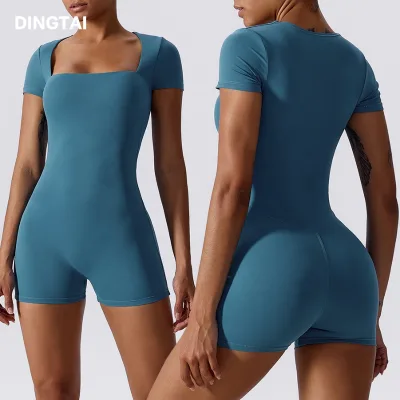


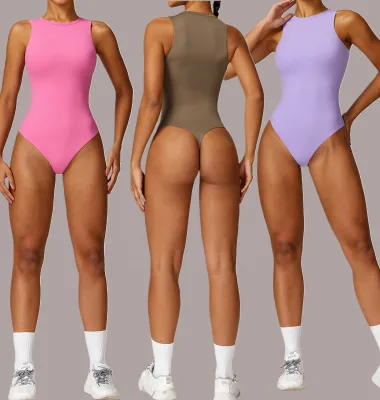
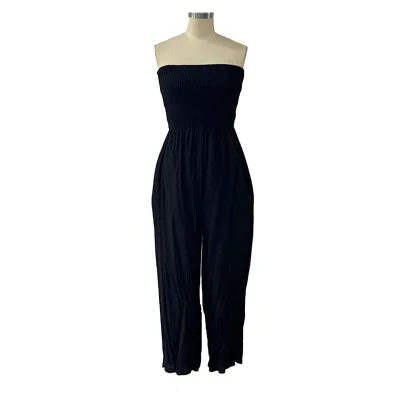



Comprehensive Sourcing Guide
Strategic Sourcing Guide for Sexy Sleeveless Halter Neck Jumpsuits
Understanding Product Specifications and Material Composition
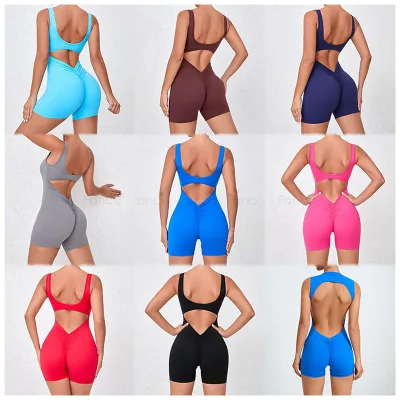
When sourcing a sexy sleeveless halter neck jumpsuit, the primary focus must be on aligning technical specifications with the intended market positioning. The product category generally encompasses a one-piece garment that combines the silhouette of a bodysuit with the coverage of trousers, often designed with a halter neckline to accentuate the shoulders and back. Based on available market data, the material composition for these items frequently utilizes a blend of Spandex and Polyester. This combination is critical for achieving the desired "sexy" fit, as Spandex provides the necessary elasticity for a skinny fit, while Polyester ensures durability and shape retention.
The fabric weight and standard are vital indicators of quality. In the current supply landscape, standard specifications for these garments often range between 160 and 200gsm. This weight class suggests a medium thickness, suitable for year-round wear across Spring, Summer, Autumn, and Winter seasons, depending on the specific design layering. Buyers should verify that the supplier explicitly states the fabric composition, as some listings indicate a Cotton/Spandex blend, while others rely heavily on Polyester/Spandex. The presence of Spandex is non-negotiable for the "skinny" fit type and the "sleeveless" construction, which requires high stretch recovery to maintain the halter neck structure without sagging.
Furthermore, specific product attributes such as "Breathable," "Quick Dry," and "Anti-Pilling" are frequently observed in high-quality listings. These features are not merely marketing terms but functional requirements for activewear and fashion-forward jumpsuits used in fitness or dancing. The "Eco-Friendly" attribute is also gaining traction, though buyers must request specific documentation to verify this claim rather than accepting it as a general statement. The color palette for these items typically includes versatile options like Black, White, Dark Green, and Rose Pink, allowing for broad market appeal.
Compliance, Certification, and Quality Standards
Navigating the compliance landscape for international apparel procurement requires rigorous verification of standards. While some background information suggests the existence of OEKO-TEX certification, this should not be assumed as a universal standard for all listed products. Instead, buyers must treat certification status as a variable that requires direct confirmation from the supplier. The absence of a specific certification in a product listing does not imply non-compliance, but it does necessitate a request for third-party testing reports.
Quality assurance is often anchored in specific numerical standards. In the observed data, an AQL (Acceptable Quality Limit) of 2.5/4 is mentioned as a benchmark. This standard refers to the maximum number of defects allowed per 100 units inspected, with 2.5 representing critical defects and 4.0 representing major defects. Buyers should ensure that their supplier adheres to this or a stricter AQL standard before finalizing orders. Additionally, the "Quality" attribute often correlates with the production process, where suppliers may claim adherence to specific factory standards.
For products originating from China, particularly from regions like Nanchang City, Jiangxi Province, or Shanghai, buyers must be aware of local export regulations. While specific export licenses are not detailed in the provided facts, the origin location implies a mature supply chain. However, the "Standard" field sometimes lists dimensions like "504050," which likely refers to packaging dimensions rather than product standards. Buyers must distinguish between packaging specifications and material safety standards. If the product claims to be "Eco-Friendly," the buyer should demand proof of compliance with relevant environmental regulations in the destination market, such as REACH in Europe or CPSIA in the United States, rather than relying on the supplier's self-declaration.
Cost Drivers and Pricing Dynamics
The pricing structure for sleeveless halter neck jumpsuits is influenced by several dynamic factors, including material costs, order volume, and customization requirements. The observed price range in the market spans from $0.93 to $19.99 USD. This wide disparity indicates that the final cost is heavily dependent on the specific configuration of the order. The lower end of the spectrum likely corresponds to basic, high-volume orders with minimal customization, while the higher end reflects premium materials, complex designs, or smaller batch sizes.
A significant cost driver is the Minimum Order Quantity (MOQ). The data shows an MOQ range from 1 to 200 units, but specific high-quality listings may require a minimum of 300 pieces per design. This threshold is crucial for buyers to understand, as ordering below the MOQ often results in a significantly higher unit price or may not be feasible at all. The "MOQ: 300PCS Per Design" specification suggests that for custom designs, the supplier requires a substantial volume to justify the setup costs for pattern making and dyeing.
Customization is another major factor affecting cost. The availability of OEM (Original Equipment Manufacturer) and ODM (Original Design Manufacturer) services allows buyers to tailor the product to their brand. However, these services often come with a premium. The "Service: OEM & ODM" attribute implies that the supplier can modify the halter neck design, adjust the fit type, or change the color palette. Buyers should anticipate that custom colors, such as those requested by the customer, may incur additional setup fees or higher MOQs compared to standard stock colors like Black or White.
Typical Applications and Usage Scenarios
The versatility of the sleeveless halter neck jumpsuit makes it suitable for a diverse range of applications. The "Usage" attribute explicitly lists Fitness and Dancing, highlighting the garment's functional role in active environments. The "Quick Dry" and "Breathable" features are essential for these activities, ensuring that the wearer remains comfortable during high-intensity movement. The "Skinny" fit type and "Sleeveless" design provide the freedom of movement required for dance routines or gym workouts, while the halter neck adds a stylish element that transitions well from the studio to social settings.
Beyond active use, the garment serves as a fashion statement for casual and semi-formal occasions. The "Effect" attributes, such as "Buttock Upward" and "Pull-in Stomach," indicate that these jumpsuits are designed with shapewear capabilities. This dual functionality appeals to consumers looking for garments that offer both aesthetic enhancement and practical comfort. The "Long" clothing length and "O-Neck" or halter variations allow for different styling options, making the item suitable for various body types and personal preferences.
The "Suit" type classification in some listings suggests that these jumpsuits may be part of a coordinated set or designed to be worn as a complete outfit. The "2 Piece Jumpsuit" item description further reinforces the idea of a comprehensive wardrobe solution. Buyers should consider the end-user's lifestyle when selecting specific models. For instance, a model with "Anti-Bacterial" properties would be ideal for fitness applications, while a model with "Eco-Friendly" materials might appeal to environmentally conscious fashion consumers.
Supplier Evaluation and Origin Considerations
Evaluating suppliers requires a deep dive into their operational capabilities and geographic origins. The supply chain for these garments is predominantly centered in China, with specific hubs identified in Nanchang City, Jiangxi Province, and Shanghai. These locations are known for their textile manufacturing infrastructure, but buyers should verify the specific factory capabilities for each supplier. The "prod_origin" field confirms that the products are manufactured in China, but the specific city can impact logistics and communication efficiency.
When assessing a supplier, buyers should look for evidence of their ability to handle the "Customization: Available" requirement. This includes the capacity to manage different fabric blends, such as Cotton/Spandex or Polyester/Spandex, and to execute specific design requests. The "Samples: 3-7 Days" attribute indicates a relatively quick turnaround for prototyping, which is a positive sign for agile supply chains. However, buyers must confirm if this timeline applies to all customization levels or only to minor adjustments.
The "Service" attribute, specifically "OEM & ODM," is a key indicator of a supplier's flexibility. A supplier offering these services should be able to assist with design modifications, branding, and packaging. Buyers should request case studies or examples of previous work to verify the quality of their customization services. Additionally, the "Packing" method, whether "Carton" or "Polybag," should be evaluated based on the destination market's requirements. Some regions may have strict regulations regarding packaging materials, so ensuring the supplier can adapt their packing methods is essential.
Quality Control and Long-Term Procurement Strategy
Implementing a robust quality control (QC) strategy is paramount for maintaining brand reputation. The "AQL 2.5/4" standard provides a baseline for inspection, but buyers should develop a more comprehensive QC plan that includes pre-production, in-line, and pre-shipment inspections. Given the "Anti-Pilling" and "Anti-Shrink" claims, buyers must verify these properties through actual testing, as these are performance attributes that can degrade over time if not properly manufactured.
Long-term procurement considerations involve building a sustainable relationship with suppliers who can scale with demand. The "MOQ" variability suggests that suppliers may be willing to negotiate for long-term partners. Buyers should aim to secure a consistent supply chain by establishing clear communication channels and agreeing on standard operating procedures. The "Lead Time" is not explicitly provided in the data, but the "Samples: 3-7 Days" metric suggests a responsive production cycle. Buyers should clarify the full production lead time for bulk orders to ensure timely delivery.
Finally, buyers should prioritize suppliers who demonstrate a commitment to quality and compliance. The "Eco-Friendly" and "Anti-Bacterial" attributes, while observed, require verification. A long-term strategy should include regular audits and performance reviews of suppliers to ensure they continue to meet the required standards. By focusing on these aspects, buyers can mitigate risks and ensure a steady supply of high-quality sleeveless halter neck jumpsuits that meet market demands.
Comparative Analysis of Product Attributes
To facilitate decision-making, the following table summarizes key product attributes observed in the market for sleeveless halter neck jumpsuits. This comparison highlights the variability in specifications and helps buyers identify the most suitable options for their specific needs.
| Attribute Category | Common Observation | Verification Requirement |
|---|---|---|
| Material | Spandex / Polyester, Cotton / Spandex | Request fabric composition certificate |
| Weight/Standard | 160~200gsm | Verify fabric weight with swatch |
| Fit Type | Skinny, Comfortable | Confirm sizing chart accuracy |
| Features | Breathable, Quick Dry, Anti-Pilling | Request test reports for specific claims |
| Origin | Nanchang City, Shanghai, China | Verify factory location and audit reports |
| MOQ | 1-200, 300PCS Per Design | Negotiate based on order volume |
| Packing | Carton, Polybag | Confirm packaging standards for destination |
| Quality Standard | AQL 2.5/4 | Define inspection criteria in contract |
| Customization | Available (OEM/ODM) | Review sample approval process |
This table serves as a reference point for buyers to ensure that all critical aspects of the product are addressed during the sourcing process. By systematically verifying each attribute, buyers can minimize the risk of receiving substandard products and ensure that the final garments meet their brand's quality expectations.
FAQs
What materials are used for sexy sleeveless halter neck jumpsuits?
The primary materials are Spandex and Polyester blends, though some listings specify Cotton and Spandex. These combinations ensure a skinny fit and durability. Buyers should verify the specific fabric composition in product details to confirm elasticity and shape retention.
Which features are common in these jumpsuits?
Common features include Breathable, Quick Dry, Anti-Pilling, and Anti-Shrink properties. Some models also offer Anti-Bacterial effects and Eco-Friendly claims. These attributes make the garments suitable for fitness, dancing, and year-round wear across spring to winter seasons.
Can I customize the design and packaging?
Yes, customization is available including OEM and ODM services. Buyers can request specific colors, packaging methods like cartons or polybags, and design modifications. However, custom designs often require a minimum order quantity of 300 pieces per design to justify setup costs.
What are the typical MOQ and price ranges?
The observed MOQ ranges from 1 to 200 units, but custom designs may require 300 pieces per design. Prices vary widely from 0.93 to 19.99 USD depending on volume and customization. Lower prices typically apply to high-volume orders with minimal changes.
Where are these products manufactured?
Products originate from China, specifically Nanchang City in Jiangxi Province and Shanghai. Buyers should verify the specific factory location as it impacts logistics. The supply chain is mature in these regions, supporting various fabric blends and production standards.
What quality standards are applied to these items?
Quality is often measured against an AQL 2.5/4 standard for defect limits. Some listings specify fabric weights between 160 and 200gsm. Buyers must request third-party testing reports to verify claims like Eco-Friendly or Anti-Bacterial rather than relying on general statements.
How long does it take to get samples?
Sample preparation typically takes 3 to 7 days. This timeline supports agile supply chains for prototyping and design verification. Buyers should confirm if this duration applies to all customization levels or only minor adjustments to standard stock items.